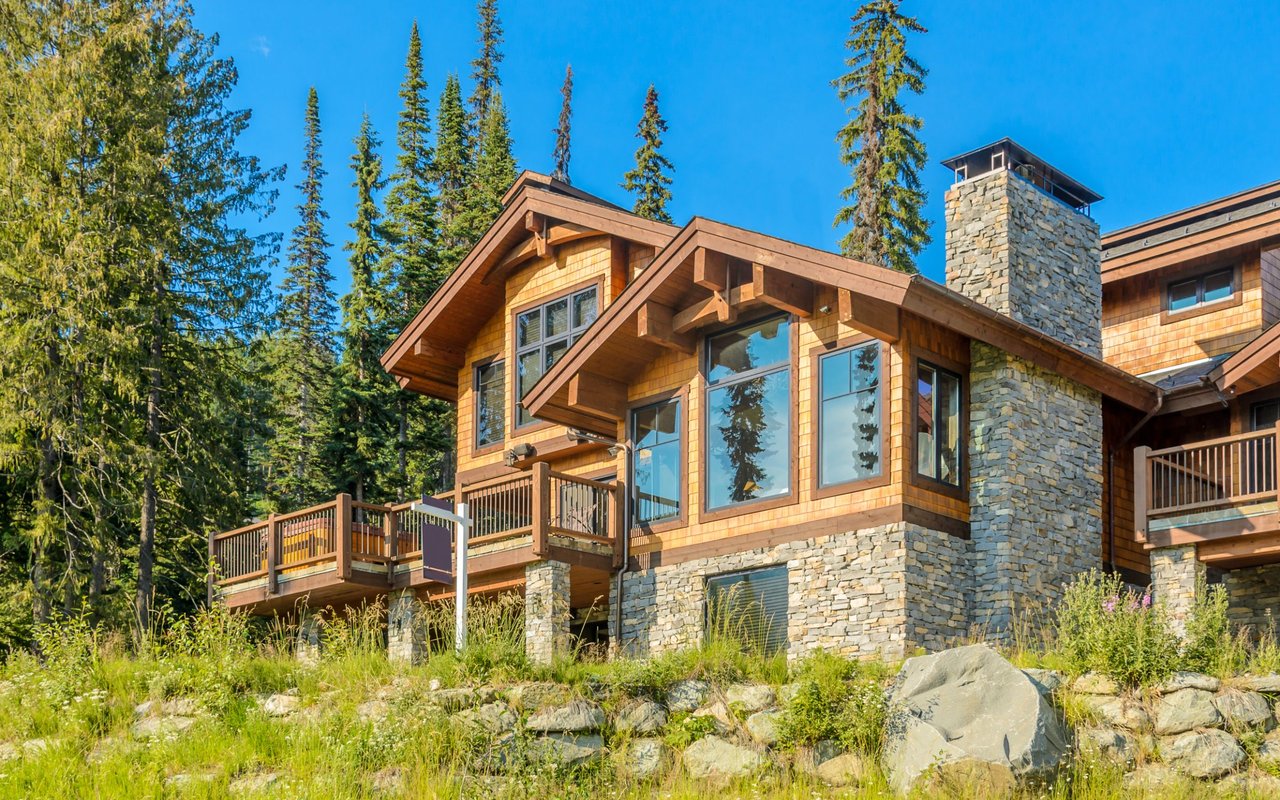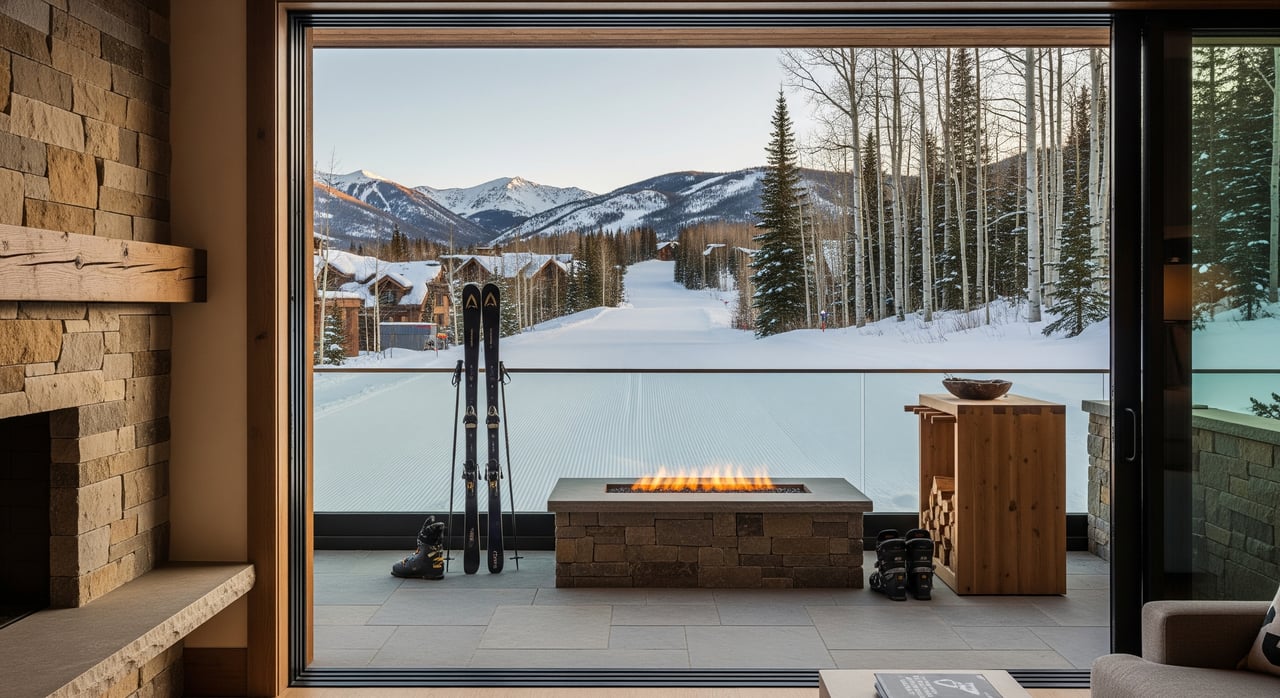
You see “ski-in/ski-out” on an Old Town listing, but what does that really look like at the Town Lift? If you are eyeing a second home, easy laps and quick Main Street lunches are part of the dream, and accuracy matters. In this guide, you will learn clear definitions, how to verify any claim on the ground, and how access affects value in Old Town. Let’s dive in.
What ski-in/ski-out really means
Not all “ski access” is the same. In Old Town, small distances and steep lots can change the experience a lot. Use these clear terms when you compare properties and ask questions.
True ski-in/ski-out
Definition: You can click in at the property, ski to a lift, groomed run, or permitted ski route, and return home on skis without removing skis, crossing a plowed road on foot, or walking a non-skiable segment. The route follows maintained, designated resort terrain or permitted ski corridors.
What it looks like in Old Town: A door, terrace, or backyard that meets a groomed run or a short, consistently skiable traverse in normal resort conditions near the Town Lift network.
Ski-to or ski-back (ski-access)
Definition: You can generally ski to or from the property, but you may cross a short flat, step over an obstacle, or walk a brief connecting segment. You might remove skis for a few steps, or use a short walkway that links to resort terrain.
What it looks like in Old Town: A mostly skiable return to the building with an occasional short walk, a soft snow corridor, or use of a resort easement behind the property.
Walk-to-lift
Definition: You carry skis to the lift or run. Stairs, sidewalks, pedestrian plazas, or streets sit between the entrance and the lift.
What it looks like in Old Town: A building that fronts a street or plaza near Town Lift where skis are on your shoulder until you reach the snow.
Old Town terrain and access context
Old Town sits below Park City Mountain Resort’s Town Lift. Historic lots can be steep, narrow, and close together. Many buildings face streets or plazas, and access paths may include stairs or retaining walls.
Because Old Town is compact, two homes that are side by side can have very different routes to the snow. Some lower-elevation condos and townhomes have doors that open to resort terrain or resort-permitted corridors. Others rely on nearby sidewalks or short connectors.
Seasonal conditions change the picture. In heavy snow, a short traverse may be easy. In light snow, the same path may require walking. Resort operations also matter. Grooming plans, temporary trail closures, and event zones can turn a ski-to route into a walk-to route on certain days.
How to verify a listing’s claim
When a property advertises “ski-in/ski-out,” test it. In Old Town, a repeatable checklist will protect your expectations and your investment.
Request these documents first
- Legal description and recorded plat. Confirms the parcel boundary and whether the lot touches resort land or a recorded access corridor.
- Title report and survey. An ALTA or owner’s survey will show boundaries, easements, and rights-of-way that affect direct ski access.
- HOA governing documents, CCRs, and condo plat. Look for common area ski corridors, recorded access easements, or restrictions on exterior doors and entrances.
- Seller’s disclosure. Note any stated limitations such as “must cross sidewalk,” “access via resort easement,” or “not legal to ski across street.”
- Park City Mountain Resort trail map and boundary overlays. Confirm where public runs and permitted ski routes lie relative to the property.
- City or county GIS parcel maps. Check elevations, parcel dimensions, and proximity to lift infrastructure.
Test the route on snow
- Visit in winter during normal operating hours. Try the route both ways: door to lift, and lift back to door.
- Ask yourself: Can I put skis on at the property and reach the lift without walking or crossing a plowed road? Can I ski back without stepping off skis?
- Observe the corridor. Is it groomed or consistently skiable? Do stairs, fences, narrow passages, or retaining walls interrupt the path?
- Watch for signs or rules. Is the path a designated resort trail, or a pedestrian area where skiing is prohibited?
- Check in different conditions. Try after fresh snow and during low-snow periods to gauge consistency.
Smart questions for agents, HOAs, and the resort
- Is ski access deeded or defined by a recorded easement across neighboring property or common area?
- Does the resort permit skiing across this corridor every season, or only in certain conditions?
- How close is the nearest lift boarding area in distance and vertical drop?
- Is any on-foot segment required, such as stairs, sidewalks, or parking lots? How long is it?
- Have there been any temporary closures, reroutes, or municipal rules that changed the route?
Red flags to watch
- Marketing claims “ski-in/ski-out” without a survey, easement, or on-snow demonstration.
- Required crossing of a public sidewalk, pedestrian plaza, or plowed street where skiing is not allowed.
- The route crosses another property without a recorded easement.
- HOA rules prohibit using certain exterior doors for ski access.
- Vague promises like “works if there is enough snow” with no detail on typical conditions.
Value and resale in Old Town
Ski access drives demand in resort markets, and Old Town is no exception. The premium you pay depends on the type of access and the rarity of that setup near Town Lift.
- Premium and scarcity. Doorstep ski-in/ski-out is scarce in Old Town and can command a premium compared to ski-to or walk-to units. Property type also matters. A fee simple home with true slope access can price differently than a condo with shared corridors.
- Liquidity and buyer pool. True ski-in/ski-out attracts a wide pool of second-home buyers who prioritize convenience, which can shorten days on market in active winters. Ski-to or walk-to still sells well for buyers who value Main Street proximity, but expectations differ.
- Operating costs and insurance. Slope-adjacent properties can include extra maintenance for snow loads, stairs, bridges, or drifting. Confirm insurance needs, especially if private access areas cross common space.
- Resale disclosures. Accurate representation is essential. Keep documentation from your purchase that shows surveys, easements, and resort permissions. It will help set clear expectations for future buyers.
- Seasonality effects. Properties that remain skiable in typical winters can sustain value better than those that only work in high-snow years. Consistency is worth paying for.
How Old Town’s setup shapes access
Old Town’s historic fabric creates edge cases. Sidewalks, narrow corridors, and steps can break what seems like a straight shot to the snow. A few patterns recur:
- Some lower-elevation buildings or back-facing units open to groomed terrain or resort-permitted corridors that behave like true ski-in/ski-out in normal seasons.
- Many homes marketed as ski-in/ski-out are actually ski-to or walk-to in light snow years, or when a pedestrian zone is closed to skiing.
- Main Street proximity is a real asset for lifestyle and rental appeal, but it often pairs with walk-to-lift routes rather than true ski-in/ski-out.
Knowing these patterns helps you focus on the properties that truly match your goals.
Buyer strategy and offer protections
Build verification into your process. It sets you up for success and reduces surprises.
- Include a contingency that lets you verify ski access with an on-snow visit and a review of title and HOA documents before you waive due diligence.
- Ask for the latest HOA statements describing ski corridors and any exterior door rules.
- Confirm with the resort where skiing is permitted near the parcel, and whether operational changes could affect your route.
- Engage title counsel if you need help interpreting easements or boundary nuances.
These steps keep the lifestyle promise aligned with the property you pick.
Quick checklist you can use today
- Define your goal: true ski-in/ski-out, ski-to, or walk-to.
- Pull the legal description, recorded plat, title report, and a recent survey.
- Review HOA documents for ski corridors and restrictions.
- Compare the resort trail map and boundary overlays to the parcel.
- Visit in winter, test door-to-lift and lift-to-door routes.
- Ask about any on-foot segments, closures, or reroutes.
- Document what you observe for your records and for resale.
Your next step
If Old Town’s Town Lift is your ideal base, make sure the property’s access matches your expectations in real life, not just in marketing. A clear definition, the right documents, and an on-snow test will give you confidence. If you want help organizing the verification, aligning offers with your goals, and weighing value across true ski-in/ski-out versus ski-to or walk-to options, connect with Miriam Noel to schedule a personalized consultation.
FAQs
What does true ski-in/ski-out mean in Old Town?
- You can ski from your door to a lift or run and return home on skis without walking segments or crossing plowed roads, using permitted resort terrain or easements.
How reliable is Town Lift access in low-snow years?
- Routes that work in typical winters may require walking in light snow; consistency depends on snowfall, grooming, and any temporary resort or city restrictions.
Which documents confirm real ski access rights?
- A recorded plat or survey showing boundaries and easements, plus HOA documents describing ski corridors, form the clearest evidence of access.
Does crossing a short sidewalk still count as ski-in/ski-out?
- No, if you must walk a non-skiable segment or cross a plowed public area, it fits better under ski-to or walk-to rather than true ski-in/ski-out.
How much more do ski-in/ski-out homes cost in Old Town?
- Premiums vary by the quality of access, property type, and scarcity; true doorstep access near Town Lift typically commands a higher price than ski-to or walk-to.
Can an HOA or the resort change access after I buy?
- HOA rules and resort operations can affect routes; rely on recorded easements and confirm permitted corridors to reduce the risk of future changes.
What offer language helps protect my ski access goal?
- Include a contingency to verify ski access through on-site testing in winter and a review of title, survey, and HOA documents before final approval.